

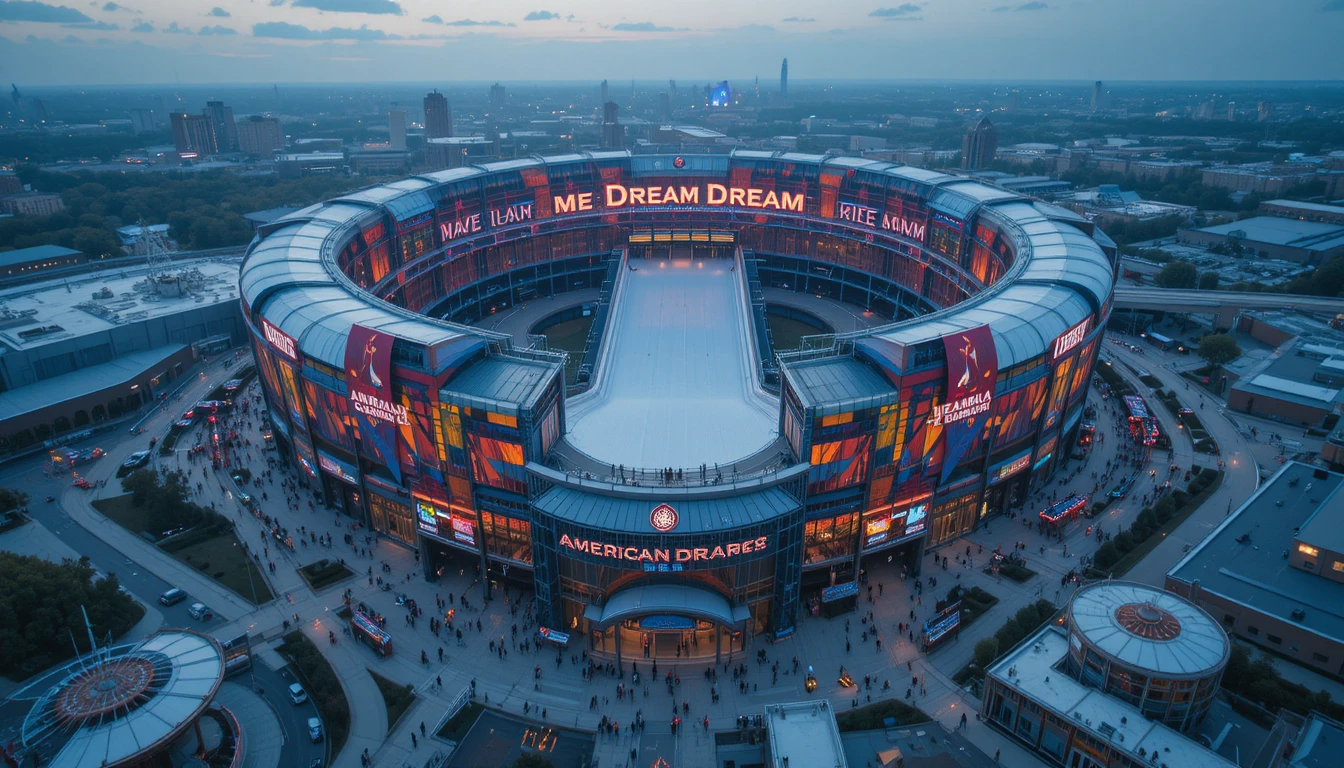
If you’ve ever driven past the Meadowlands Sports Complex in East Rutherford, New Jersey, you might have noticed a massive, colorful structure that seems almost too big to be real. Locals call it many things, some jokingly, some with awe. Officially, this building is the product of one of the most ambitious development projects in New Jersey’s history — the Xanadu Project New Jersey. Over the years, it evolved from a bold dream into the mega-entertainment and shopping destination now known as American Dream Meadowlands.
The story of Xanadu isn’t just about construction or retail; it’s about vision, risk, financial turmoil, reinvention, and the perseverance that finally brought the project to life. For over a decade, it captured headlines, inspired debates, and fascinated anyone who’s curious about large-scale developments.
The Beginning: A Vision Like No Other
The concept of the Xanadu Project New Jersey started in the early 2000s. The Meadowlands Sports Complex was already a hub for major events, but developers saw untapped potential. The site had space, accessibility, and visibility that could support something extraordinary — a mall that wasn’t just for shopping but for entertainment and leisure.
The Mills Corporation, a Virginia-based developer, was inspired by its success in Spain with a mall called Madrid Xanadú. They envisioned bringing that experience to New Jersey: a multi-use space combining retail, rides, indoor skiing, theaters, and restaurants all under one enormous roof. This wasn’t a simple shopping center; it was meant to be a destination that could rival the best amusement parks and malls in the country.
Construction officially broke ground in 2004, with optimism high and media coverage intense. The plans included hundreds of stores, a giant indoor Ferris wheel, theaters, nightclubs, and even an indoor ski slope — an ambitious feature that would allow visitors to experience snow in the middle of New Jersey. The scale of the project was staggering, and expectations were even higher. Everyone in the area was talking about the Xanadu Project New Jersey and what it could bring to the region.
Early Challenges: Money Troubles and Construction Delays
Although the project started with excitement and fanfare, the reality of building such a massive complex quickly became clear. By 2006, costs had soared from an initial estimate of $1.3 billion to nearly $2 billion. The original developers faced financial pressures, and the Mills Corporation eventually sold its stake to Colony Capital. This shift slowed the project, and rumors about potential delays began circulating.
Then came the global financial crisis of 2008. Suddenly, financing evaporated. Key lenders, including major banks, either went bankrupt or withdrew funding. Construction stopped in 2009, leaving the Xanadu structure almost 80% complete. For years, the unfinished building stood as a monument to ambition gone awry, drawing criticism from locals and media alike. Some even called it “the ugliest building in New Jersey,” and former Governor Chris Christie famously remarked that it was “an offense to the eyes.”
For the next several years, the site remained stagnant. The partially built complex became a cautionary tale, but its location, size, and partially completed infrastructure kept it from being abandoned entirely. People continued to watch, curious about whether this grand project would ever become reality.
The Revival: Triple Five and American Dream Meadowlands
The turning point came in 2011, when the Canadian company Triple Five Group, known for owning the Mall of America and West Edmonton Mall, took over the project. They didn’t just want to finish it; they wanted to reimagine it entirely. The Xanadu Project New Jersey was rebranded as American Dream Meadowlands, reflecting a new vision focused more on experiences than just retail.
Under Triple Five, the complex became an entertainment and retail hub. Visitors could finally see many of the features originally promised, but with modern touches:
- Nickelodeon Universe — an indoor theme park with rides for all ages.
- Big SNOW American Dream — an indoor ski slope, the crown jewel of the original Xanadu plan.
- DreamWorks Water Park — an immersive water park for families.
- Hundreds of shops, dining options, an NHL-sized ice rink, and even an aquarium.
Rather than being just a shopping center, the site became an experience-driven destination, which was smart considering the decline of traditional malls nationwide.
Lessons Learned from the Xanadu Project
The Xanadu Project New Jersey provides many lessons for developers, planners, and investors.
Overambition vs. Realistic Planning
The original plans were enormous and included cutting-edge attractions. While impressive, these features significantly increased complexity, cost, and risk.
Economic Sensitivity
The 2008 financial crisis exposed how vulnerable large-scale developments are to economic shifts. Projects that depend heavily on financing can stall if the market changes unexpectedly.
Political and Community Challenges
Subsidies, tax incentives, and public infrastructure investments were heavily debated. While some viewed them as necessary for the economy, others criticized them as taxpayer-funded risks.
Despite these setbacks, the project’s vision and location helped it survive. The persistence of developers, investors, and state officials eventually transformed a stalled construction site into a functioning mega-destination.
Local Reactions: Mixed Opinions
Today, opinions about the former Xanadu Project New Jersey are divided. Many locals and tourists enjoy the attractions, shopping, and events. Families especially appreciate the theme parks and indoor skiing, which are unique in the region.
Others are critical. Complaints range from confusing layouts to parking challenges. Still, even skeptics acknowledge the magnitude of the project and its impact on the New Jersey landscape. Whether loved or criticized, the project has become a landmark in its own right.
Why the Xanadu Project Still Matters
The story of the Xanadu Project New Jersey is more than a construction saga; it’s a tale of ambition, failure, reinvention, and innovation. It shows how mega-projects can face financial, technical, and political challenges, but also how determination and strategic pivoting can eventually create success. Today, American Dream Meadowlands stands as one of the largest entertainment and retail complexes in North America, a symbol of what perseverance can achieve.
FAQs
What was the original Xanadu Project New Jersey?
It was a multi-use entertainment and retail complex in the Meadowlands, designed to include shops, rides, and attractions like an indoor ski slope.
Is the Xanadu Project open today?
Not under the name Xanadu. Today, it’s American Dream Meadowlands, which opened in phases starting in 2019.
Why did construction stall for so long?
Financing issues, the 2008 economic crisis, cost overruns, and changes in ownership caused years of delays.
What can visitors do at American Dream Meadowlands today?
Visitors can enjoy theme parks, water parks, skiing, shopping, dining, ice skating, and an aquarium — all in one location.
Final Thoughts
The Xanadu Project New Jersey was once a symbol of overambition and stalled dreams. Yet, through reinvention and determination, it transformed into American Dream Meadowlands, a destination blending retail, leisure, and entertainment unlike any other in the U.S. Its story is a lesson in vision, resilience, and the challenges of making giant ideas real. Whether you’re a New Jersey local, a tourist, or someone interested in mega-developments, Xanadu’s legacy is impossible to ignore.
