

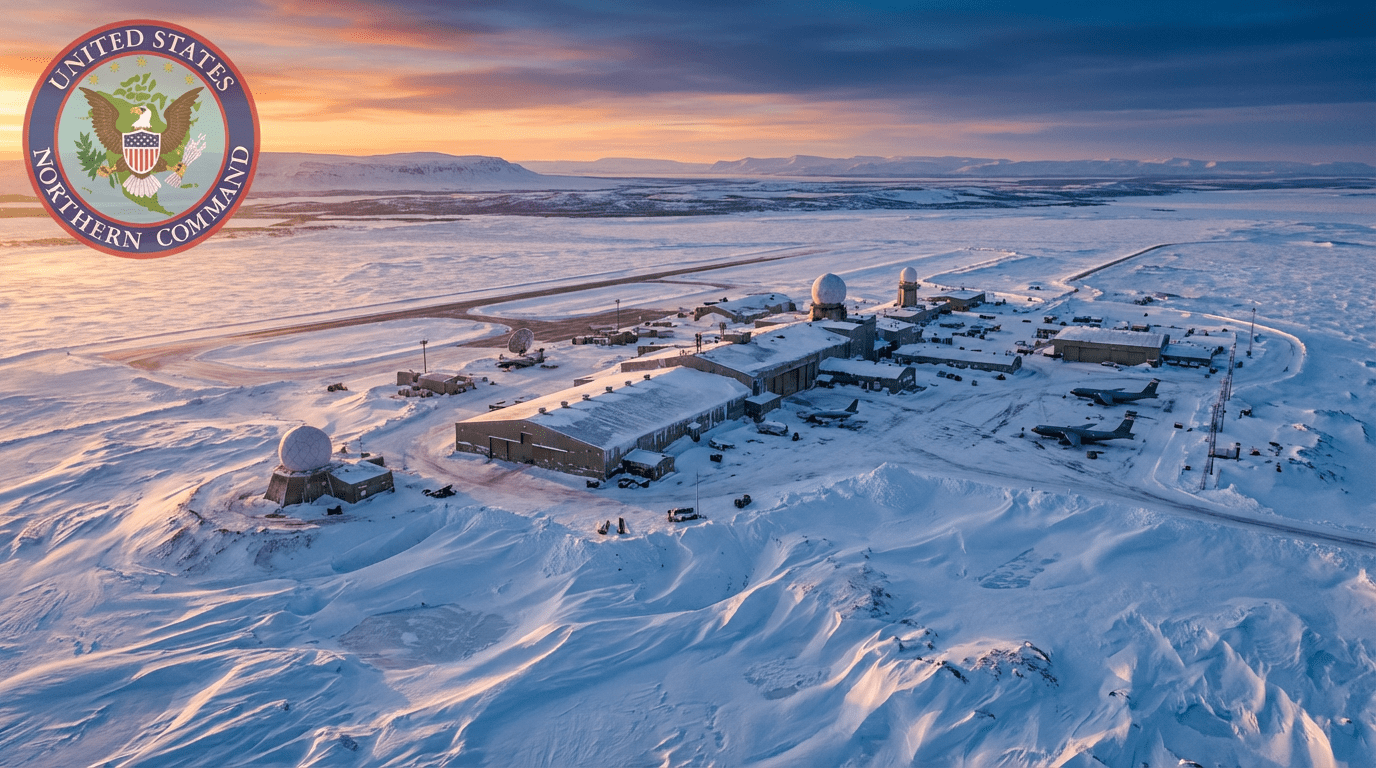
When you first see the phrase Trump Greenland Arctic defense command shift, you might nod, skim and keep scrolling — it sounds boring, bureaucratic, doesn’t it? But stick with me. This topic is one of those slow‑burn strategic moves that could shape geopolitics in the decades ahead. It’s about military planning, history, alliances, Arctic power, and yes… a little bit of political ambition.
This article isn’t going to be dry. We’re going to talk about why this shift happened, what it really means, how people in Greenland and Denmark feel about it, and what historians and strategists are whispering behind closed doors. By the time you finish reading, you won’t need to go chase another website to make sense of this — you’ll have the full picture.
What Exactly Is the “Trump Greenland Arctic Defense Command Shift”?
Okay, start here: this shift changed which part of the U.S. military has official oversight over Greenland’s defense activities. Previously, Greenland — or more precisely, American military operations connected to it — were under U.S. European Command (EUCOM). Now, they’ve been moved to U.S. Northern Command (NORTHCOM).
That sounds simple, but it’s actually a major organizational switch. EUCOM focuses on Europe and parts of Africa. NORTHCOM’s job? Defending the U.S. homeland itself — including airspace, missile warning, and activities that affect North America directly.
In effect, this isn’t just a paper shuffle — it’s a signal that the Trump administration sees Greenland as a piece of North American security rather than something primarily tied to Europe. This is the essence of the Trump Greenland Arctic defense command shift.
So Why Now? A Bit of Context (With a Story)
Imagine you’re sitting in a Pentagon briefing room. Maps stretch across screens. One in particular shows the Arctic — a wide, icy frontier where Russia, China, NATO countries, and the U.S. all have interests. Somewhere in that expanse is Greenland — huge, resource‑rich, and sitting right between North America and Europe.
For decades, the U.S. has had a military presence there — especially at the Pituffik Space Base, formerly called Thule Air Base, now run by the U.S. Space Force. That base plays a real role in tracking missiles and objects in space that could threaten North America.
But administratively? Until recently, Greenland fell under EUCOM. Why? Historical ties, tradition, Cold War setups. But it’s also politically Europe‑centric.
In 2025, President Trump ordered that Greenland be shifted to NORTHCOM’s responsibility — part of a broader review of the U.S. Unified Command Plan, the blueprint that divides U.S. military responsibilities across the globe.
Now here’s where it gets interesting: this wasn’t just military housekeeping. This was a strategic move, deeply tied to the president’s broader vision of American power — especially in the Arctic.
Trump’s Interest in Greenland Goes Beyond Bureaucracy
If you only heard about the Trump Greenland Arctic defense command shift in a headline, you might miss the political layers beneath it.
Since returning to office, President Trump has publicly talked about Greenland more than almost any U.S. president in decades. He’s said things like “one way or the other, we’re going to get it” and refused to rule out using military force to take control of the island. That’s not normal diplomatic language — even if it wasn’t official policy.
Why does he keep mentioning it? Partly because Greenland is strategically vital — it sits close to the North Pole, has radar arrays that are crucial for early warning systems, and places NATO and U.S. interests right on Russia’s northern flank.
But there’s also a political narrative here: Trump wants to show strength, assert American influence, and maybe even capture a kind of legacy by expanding U.S. strategic reach — reminiscent, some historians argue, of past eras of American expansionism.
So the Trump Greenland Arctic defense command shift is both a military reorganization and a piece of a larger political puzzle.
What This Change Does (and Doesn’t Do)
Let’s clear up the facts:
✔ What It Does
- Moves American military oversight of Greenland from EUCOM to NORTHCOM.
- Signals that Washington views Greenland as part of the North American defense perimeter.
- Brings strategic facilities like Pituffik more directly under homeland defense structures.
✘ What It Doesn’t Do
- It doesn’t make Greenland U.S. territory. Greenland remains a semi‑autonomous part of the Kingdom of Denmark.
- It doesn’t instantly change daily life for Greenlanders.
- It doesn’t magically build a wall, station tens of thousands of troops, or convert the island into a U.S. state.
So, yes, the shift is real and important — but it’s not as extreme as some headlines made it sound.
Why Greenland Is More Than Just Ice and Snow
This piece of land isn’t just about cold and remoteness.
Here’s why world powers pay attention:
Arctic Geopolitics Are Heating Up
The Arctic isn’t an isolated corner of the world anymore. Climate change is melting ice, opening new sea lanes — routes that could shorten shipping journeys between Asia and Europe. Countries like Russia and China have been increasing their military and economic presence in Arctic waters.
So control over territory close to those routes becomes more valuable.Missile Warning and Space Tracking
The Pituffik Space Base is one of the northernmost U.S. military installations, and it plays a role in space and missile defense. As long‑range weapons and space threats grow, having eyes and sensors in Greenland matters for U.S. security. Wikipedia
Symbolism and Influence
Sometimes the way you label something matters as much as the operation itself. Moving Greenland to NORTHCOM sends a message to allies and rivals: the Arctic isn’t someone else’s backyard. It’s part of the U.S. strategic horizon now.
This is the real heart of the Trump Greenland Arctic defense command shift.
How Denmark and Greenland Have Reacted
Here’s where it gets personal.
Greenlanders, by and large, value their autonomy and cultural identity. They have made it clear they do not want to be “taken over” by the United States. Many people in Greenland and Denmark push back against talk of annexation or forced control. AOL
Denmark, long an ally of the U.S. and a NATO member, has responded diplomatically but firmly — stressing respect for Greenland’s status and autonomy. Danish leaders have even boosted their own military presence in the Arctic to make sure they can defend the territory if needed. The Local Denmark
One Danish general was quoted saying that U.S. plans for Greenland weren’t keeping him up at night, illustrating how allies sometimes try to downplay rhetoric to avoid diplomatic crisis. Arab News
In short: the shift didn’t trigger explosions or flashpoints — but it did draw attention.
What Experts and Strategists Think
So let’s get into the analysts’ corner.
Some military experts argue that this shift makes practical sense. After all, from a pure defense geography perspective, Greenland is much closer to North America than continental Europe — so having it under NORTHCOM’s purview aligns with physical reality. Others say it makes logistical sense if the U.S. wants a unified defense structure for the Arctic region.
But there’s also caution. Some European allies worry that this move — especially combined with Trump’s repeated talk about “getting Greenland” — might alienate partners or unsettle NATO cooperation. The shift might seem symbolic, but symbolism matters in international affairs. Defense News
Other commentators point out that when Washington redraws maps and responsibility lines in the Pentagon, it might have ripple effects for relationships and strategy far beyond what a simple memo says.
What Comes Next?
Here’s how the road ahead could look:
1. Continued Cooperation — But With New Friction
It’s likely the U.S. and Denmark will keep working together on Arctic security — but conversations might become more complex.
2. Greenland’s Voice Matters
Greenland has its own parliament and growing aspirations. Any talk of change involving its future — even indirectly — will keep Nuuk and Copenhagen on alert.
3. Arctic Competition Isn’t Slowing
As Russia and China keep expanding their Arctic presence, Greenland’s strategic value stays high. The Trump Greenland Arctic defense command shift may be just one chapter in a longer story.
If you want even deeper historical and strategic context on how Greenland fits into U.S. foreign policy over decades, check out this explainer on how Greenland’s changing role impacts American strategy: https://www.cfr.org/article/greenlands-independence-what-would-mean-us-interests. Wikipedia
Frequently Asked Questions (FAQs)
Q: Does the shift mean Greenland is now U.S. territory?
No. The shift changes how the U.S. military organizes command — not Greenland’s sovereign status.
Q: Why did Trump make this shift?
The official reason was to better align defense planning with geographical reality and homeland defense priorities, but it also fits into broader political and strategic goals.
Q: Will Greenlanders have to obey U.S. military rules now?
No. Local law and Danish sovereignty still apply.
Q: Could this lead to the U.S. trying to annex Greenland?
There’s no official plan, but political rhetoric has kept the question alive in media and diplomatic conversations.
Final Thoughts
The Trump Greenland Arctic defense command shift might look like Pentagon jargon at first glance. Once you unpack it, you find threads of strategic geography, military planning, alliance politics, and the way leaders shape narratives to push big ambitions.
It is a story about how a remote, icy island in the Arctic became central to debates over homeland defense, global power competition, and what the future of security in the High North will look like.
And whether it becomes a footnote or a turning point in history — that’s a conversation the world is already having.
