

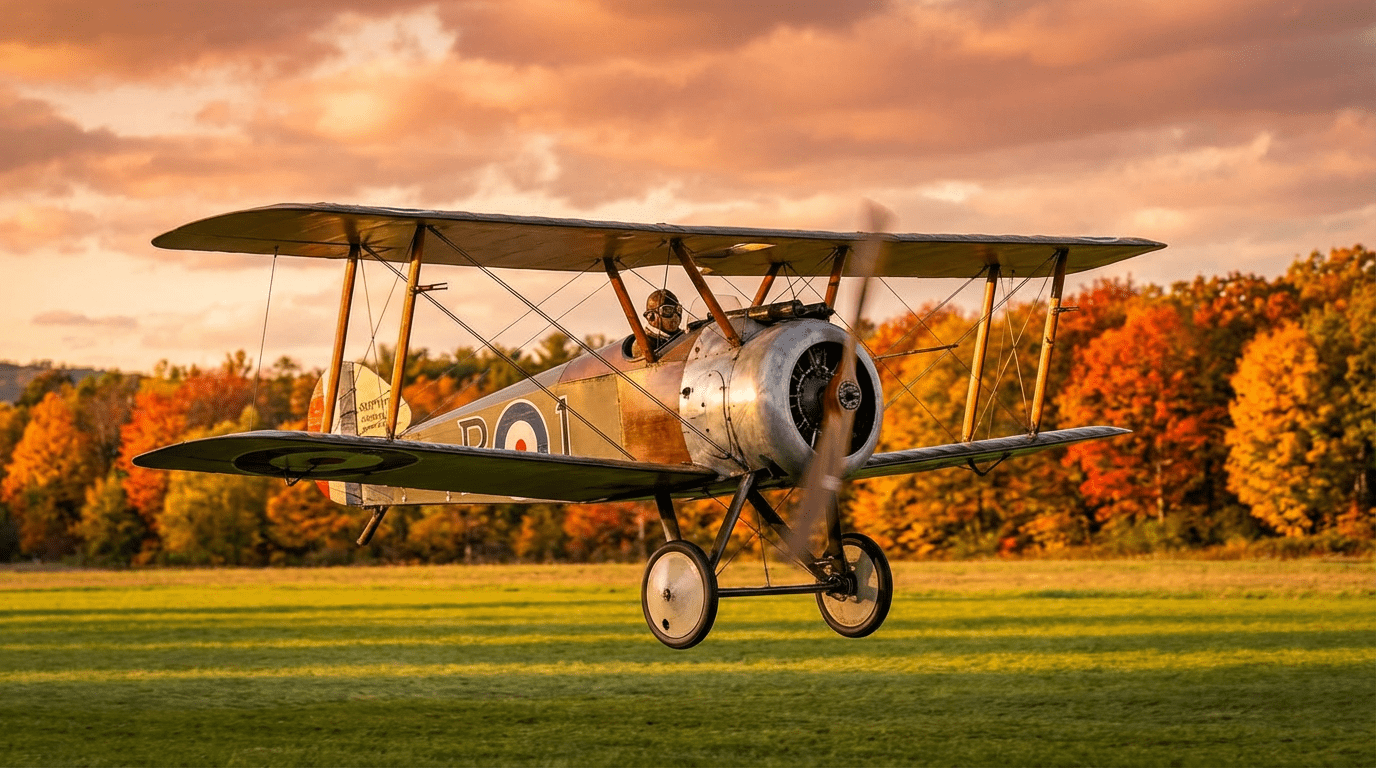
There’s a peculiar beat in the heart of aviation history that few places capture quite like the Old Rhinebeck Aerodrome plane crash story. It’s one part vintage spectacle, one part heartbreaking accident, and very much about people who live and breathe early flight. If you’ve ever seen footage of World War I-era planes wheeling through the sky on a crisp autumn afternoon, you’ll understand why the tiny old grass field in Rhinebeck, New York has become sacred ground for aviation lovers. And yet, even here, tragedy has left its mark.
This isn’t a dry retelling of dates and numbers. What follows is a human story, one that winds through the thrill of antique flight, nostalgia for a bygone era, and the stark reminder that flying especially old flying is never without risk.
A Living Museum: What Is the Old Rhinebeck Aerodrome?
Before we talk about the Old Rhinebeck Aerodrome plane crash, it’s worth understanding what this place is and why it matters.
When you walk onto the grass field at Old Rhinebeck, you don’t just see old planes you feel them. Aircraft from the Pioneer Era, World War I and the Golden Age of Aviation (the years between the wars) sit polished and proud, their wooden frames whispering of early engines and daring pilots. This isn’t a static museum with ropes and placards. The planes fly. They roar. They climb and wheel overhead as vintage cars line up on the tarmac below.
It’s easy to picture yourself in another century, watching those fragile wings carve patterns into the sky.
People come from miles around pilots, historians, families wanting their kids to see the early marvels of flight in action. And for decades, this airfield has delivered exactly that.
But with beauty and risk so closely linked, it was almost inevitable that history here would include heartbreak.
The 2008 Crash That Shook the Aerodrome
Long before people typed the words “Old Rhinebeck Aerodrome plane crash” into a search engine, there was August 17, 2008. On that summer Sunday afternoon, the air was warm, the crowd excited for a simulated dogfight classic World War I style with biplanes and triplanes duking it out in the sky.
One of those planes was a French Nieuport 24 replica, part of the Aerodrome’s treasured collection. It had been restored and maintained with love. But during the performance, the aircraft suddenly lost control and crashed into a wooded area about 1,000 feet from the runway. The pilot, Vincent Nasta, tragically lost his life.
It was the first fatality during an airshow at the facility a shock to everyone involved. People talk about that day even now: how the laughter in the crowd hushed, how calls for medical help seemed eerie against the backdrop of old engines and blue skies.
For a place that celebrated the early, carefree days of aviation, this was a stark reminder that even reproductions of old planes can carry real danger.
A Legacy of Vintage Flight, and Risk
What made the Old Rhinebeck Aerodrome so special was not just the machines, but the people who built and flew them. Volunteers spent countless hours restoring century-old designs, trying to make them fly as they once did.
That passion came with sacrifices.
There were minor mishaps over the years landing gear trouble, forced landings, propeller strikes with pilots walking away shaken but alive. One incident, for example, saw a 1914-era engine lose power shortly after takeoff, forcing a landing that damaged the plane but left the pilot with only minor injuries.
Another experimental aircraft suffered engine issues on approach in 2009, again leading to a non-injury forced landing.
These stories floated among enthusiasts, half-jokes about the temperamental nature of antique engines but they were reminders of how fragile these flying artifacts really are.
October 2024: When the Crash Hit Close to Home
Then came the accident that would bring back global attention to the phrase Old Rhinebeck Aerodrome plane crash in ways no one wanted.
It was October 5, 2024 an ordinary Saturday during the fall airshow season. Brian T. Coughlin, a 60-year-old commercial pilot, aviation enthusiast, and board member at the Aerodrome, was taking to the skies in a replica Fokker D.VIII an elegant World War I monoplane that he had rebuilt himself.
Imagine being there that afternoon: the world a gentle hum of engines, kids pointing at canvas-covered wings, adults smiling in nostalgia. Coughlin’s plane lifted off in its graceful arc a moment that must have seemed timeless to those watching.
Then, something went terribly wrong. Witnesses later said the engine developed a rough sound almost immediately after takeoff. Seconds later the plane lost power, caught fire, and plunged toward the treeline at the edge of the field.
The scene unfolded so fast that even those experienced in aviation couldn’t fully grasp it in real time. Ambulances arrived, firefighters fought the blaze, and a cloud of stunned silence seemed to settle over the crowd.
When the reporters came later, they emphasized the facts: one fatality, an aircraft destroyed, an ongoing investigation by the National Transportation Safety Board (NTSB) and the Federal Aviation Administration.
But behind every fact was a name, a family, a community deeply shaken.
Who Was Brian Coughlin?
Brian wasn’t just another pilot flying old machines. At Old Rhinebeck Aerodrome, he was family.
Pilots like Brian are a special breed. They don’t just fly. They restore. They rebuild engines that are older than most living people. They know that an aircraft from 1918 was built without computers, without modern metallurgy, without any of the safety nets we take for granted today. And yet they fly them anyway—with respect and a profound sense of history.
Brian had been involved in vintage aviation for decades. He built several replicas the Sopwith Triplane, the Fokker Dr.I, and the very Fokker D.VIII he was flying that day. They weren’t just machines to him; they were stories, pieces of a past that deserved to be seen and heard, not just stored in a museum.
His death wasn’t just another statistic. It was the loss of someone who fought to keep history alive.
What the Investigation Revealed
In the weeks after the crash, the focus shifted from grief to facts.
The National Transportation Safety Board looked closely at what went wrong and early indications pointed to engine failure as the likely cause. Videos taken by spectators showed the plane climbing normally at first, then faltering as the engine lost power. Witnesses described the rough chug of a distressed engine before the aircraft plunged toward the woods.
Understanding why is never easy. These replica engines are themselves works of art and engineering. Some use vintage-era designs with rotary components that are temperamental even in the best conditions. You couple that with a machine over 100 years old in design and you get something that demands respect and sometimes pays back unpredictably.
The full NTSB report will take months to finalize, but early findings reinforce a simple truth: even the most experienced hands can’t eliminate every danger when you’re flying machines built a century ago.
How the Aerodrome Responded
After the crash, the rest of the 2024 airshow season was canceled. Spectators were asked to stay away, not out of fear, but out of respect. The museum stayed open on limited days, but the vibrant buzz of “History of Flight” weekends was replaced with hushed conversations and quiet hangars.
For the Aerodrome’s staff, volunteers, and loyal fans, the focus shifted to recovery not just physical, but emotional and cultural. Pilots who once joked about engine quirks now walked the fields soberly. Visitors came not for the exhilaration of aerobatics, but to leave flowers by a makeshift memorial.
And yet, amidst the grief, there was determination. Determination to keep flying. To honor those lives who poured themselves into this place. To ensure that what happened didn’t mark the end, but a chapter. One that teaches respect for history and the fragility of human dream.
Why This Crash Matters Beyond Rhinebeck
So much of what we think about when an Old Rhinebeck Aerodrome plane crash is mentioned isn’t just about that moment in October 2024 or even August 2008. It’s about the whole idea of aviation history live, in the present.
This aerodrome doesn’t just display history; it lives it. There are few places like it in the world. Watching a replica World War I plane climb against the Hudson Valley sky is something that makes you hold your breath. You feel connected to the young men and women who first tamed the air.
That connection is powerful. And when it’s shaken by tragedy, it forces us to reckon with risk and with why we honor the past in the first place.
Frequently Asked Questions About the Old Rhinebeck Aerodrome Plane Crash
Was the crash at Old Rhinebeck Aerodrome the first fatal accident there?
No. The first fatal accident occurred in August 2008, when a replica Nieuport aircraft crashed during an airshow, killing the pilot.
What caused the October 2024 crash?
Preliminary investigations suggest engine failure leading to a loss of power, followed by a fire and crash. The full NTSB report is pending.
Was the pilot experienced?
Yes. Brian T. Coughlin was a seasoned pilot, replica aircraft builder, and longtime volunteer at Old Rhinebeck.
Are vintage aircraft safe to fly?
They carry unique risks. Though flown carefully and inspected often, their antique designs and engines inherently lack modern safety systems. Pilots understand these risks and accept them as part of honoring aviation history.
Where can I learn more about the Aerodrome?
You can visit the official site here: Oldrhinebeck for schedules, history, and restoration projects.
A Place Where History Isn’t Silent
Every aeroplane at the Old Rhinebeck Aerodrome has a story. Some are gentle and joyful—like first flights, family memories, kids pointing at a spinning propeller. And some are sad, like the Old Rhinebeck Aerodrome plane crash that took Brian’s life.
But that mix of wonder and danger is part of why this place matters. It reminds us that flight, from its earliest days, was never simple. It was daring. It was beautiful. And yes sometimes it was tragic.
If you go there, listen closely. You might hear something more than engines. You might hear the echo of dreams that reached for the sky, for better or worse. And that’s worth remembering.
Related Article: Canada Immigration Plans 2025‑2026 What You Need to Know and How to Prepare.
