

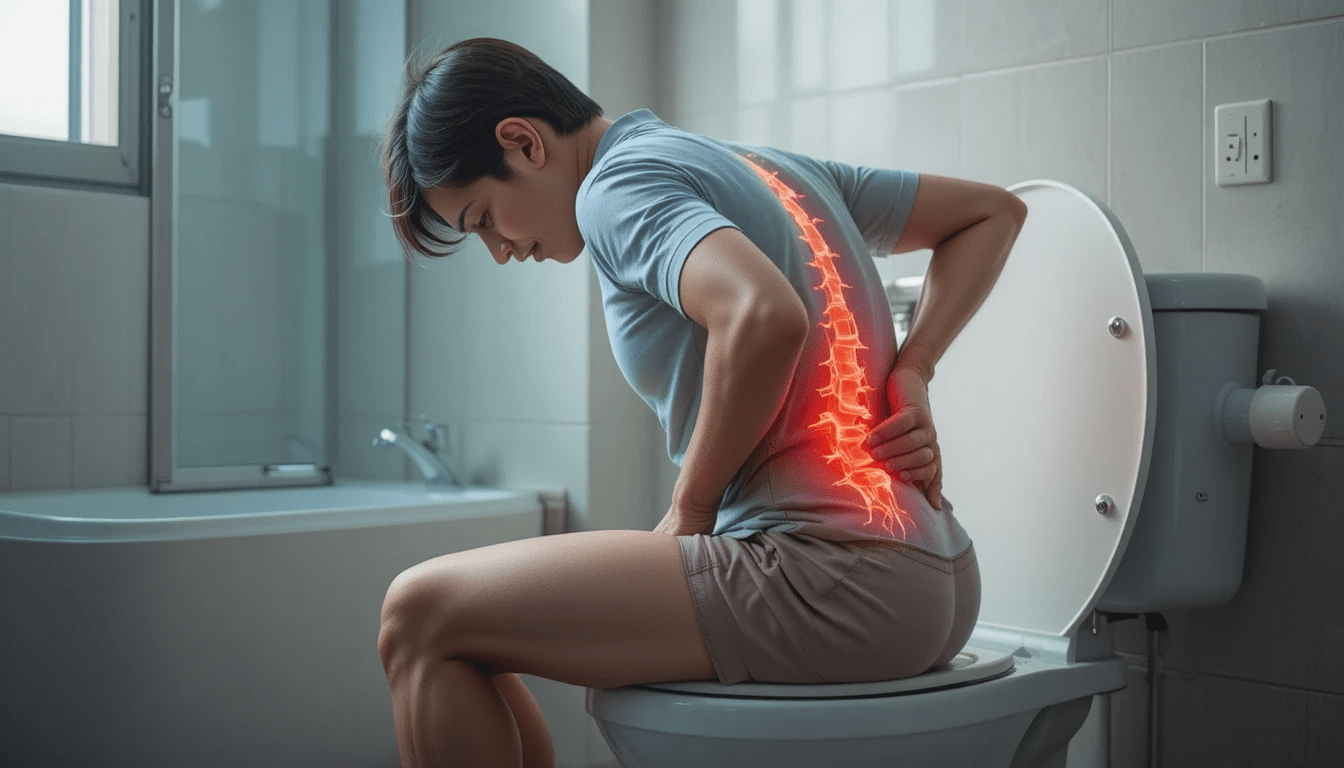
Back pain and constipation. On the surface, they seem like two totally different problems. One feels like your lower back is yelling at you every time you sit or bend. The other feels like your belly is stuck, like traffic during rush hour with no end in sight. But here’s the weird part: yes — back pain can make you constipated. And not just a little bit — for many people, the connection is real, frustrating, and often overlooked by doctors.
Let’s walk through this in a way that actually makes sense. I’m not going to hit you with boring medical jargon. I’ll talk to you the way I’d explain this to a friend who’s Googling in the middle of the night — tired, uncomfortable, and genuinely confused.
You’ll learn:
- Why back pain and constipation are connected
- Real-life scenarios where this happens
- What to do right now to ease both
- When to get medical help
- FAQs people actually ask
And by the end — you’ll understand what’s happening in your body. No fluff. No filler. Just real, usable info.
How on Earth Can Back Pain Make You Constipated?
Let’s start with the big question most people don’t ask out loud because it sounds weird.
Can back pain make you constipated?
Yes. Absolutely. And here’s why.
Your spine isn’t just a stack of bones. It’s the central communication hub for nerves that run all through your torso — including into your digestive system. The nerves that control bowel movement and abdominal muscles come from your lower back.
So if something irritates or compresses those nerves — like a strained muscle, a slipped disc, or chronic posture misalignment — it can slow down signals related to bowel function. That slowdown can quickly turn a normal day into a day of straining, bloating, and frustration.
Plus, pain changes behavior. When your lower back hurts:
- You move less.
- You sit awkwardly.
- You avoid exercise.
- You take pain meds that slow things down even more.
And suddenly your gut feels like molasses.
A Real-Life Example
I once had a friend — let’s call him Amir — who was training for a marathon. He pushed too hard one morning, tweaked his lower back, and suddenly felt like his digestion was in slow motion. Before this, he hadn’t thought twice about going to the bathroom. After the injury… nothing. For days.
Was it just coincidence? Not at all. The pain changed how his body worked — from nerves to movement to muscle tension.
Why Most People Don’t Connect the Dots
Think about it for a second. We’re taught:
- Back pain = muscles, spine, stress
- Constipation = diet, fiber, toilet habits
But no one ever says, “Hey, these two might be related.” Until you’re living it.
So most people end up:
- Googling separately for each
- Trying remedies one at a time
- Getting frustrated when nothing works
But don’t worry — once you understand the connection, you can start fixing it from both sides.
The Nervous System Link (Simple Version)
Your spine carries nerves that tell your gut, “Hey, it’s time to move food along.” If those nerves are irritated — even slightly — your gut can slow down.
This is not some rare, mystical issue. It’s basic anatomy. The large intestine gets innervation from lower spinal segments. When back pain tweaks those segments, digestion suffers.
This is also one reason why some people with sciatica — intense shooting pain down the leg — also notice constipation. The inflammation around nerves affects more than just sensation; it affects function.
Pain Medications Don’t Always Help the Stomach
Let’s talk meds for a moment.
Non-steroidal anti-inflammatories (NSAIDs) like ibuprofen can irritate the stomach or cause bloating — not ideal.
Stronger pain meds like opioids (sometimes prescribed after injury) are well known to cause constipation by slowing gut motility. This is documented and a common reason doctors also prescribe stool softeners when giving opioids. (Source: NIH / MedlinePlus)
So between pain, reduced movement, and meds — it’s no wonder your gut feels stuck.
Movement Matters More Than You Think
When you walk or move, you’re actually helping your digestive system. Think of your intestines as a lazy river — they need gentle nudges to keep food moving.
When you’re stuck in bed or sitting awkwardly because your back hurts:
- You move less
- Your hips tighten
- Your core doesn’t work well
All of this slows down peristalsis — the wave-like muscle motion that moves food through your digestive tract.
No movement = slower digestion = constipation.
Tension and Hold Patterns
Here’s something most people don’t realize:
When your back hurts, you hold your body differently.
You might:
- Clench your muscles
- Hold your belly
- Shift weight awkwardly
- Avoid bending
Guess what that does? It tightens your abdominal muscles — the same muscles your body uses when you push to poop.
Tight muscles mean trouble.
Practical Ways to Get Relief (That Actually Work)
Let’s break this down into actions you can take today — no waiting for appointments or complex equipment.
Eat Like Your Gut Depends on It (Because It Does)
Fiber is not optional here. Think of fiber as the grease that keeps your digestive engine running.
Add:
- Fruits (apples, pears, berries)
- Vegetables (broccoli, carrots)
- Whole grains (oats, brown rice)
- Legumes (beans, lentils)
Goal: 25–35 grams of fiber per day.
Make this a habit, not a quick fix.
Hydrate Like Your Back and Belly Are Connected
Because they are.
Water helps soften stool. Aim for at least 8–10 glasses a day. If you’re drinking coffee and tea, add extra water.
Move, Even If It’s Slow
Gentle walks — even 10–15 minutes — can get your digestive tract unstuck. Movement stimulates blood flow and nerve activity.
Some gentle stretches that help:
- Cat-Cow pose (easy on the back)
- Child’s Pose with relaxed breathing
- Hip openers
Do not do heavy twists or intense back bends if you’re in pain.
Mindful Bathroom Timing
Create a routine:
- Try going 20–30 minutes after breakfast
- Don’t rush
- Use a stool under feet to elevate knees — this improves alignment
Small changes, big results.
Heat + Gentle Stretching
Heat on the lower back can relax muscles and reduce nerve irritation. Combine that with slow stretching, and you might notice your gut loosening up, too.
Pharmacological Help (Carefully)
If fiber + water + movement aren’t enough:
- Consider a stool softener
- Or a gentle osmotic laxative
Talk to your doctor — especially if you’re on pain meds.
When to Be Concerned
Most of this is manageable at home. But some signs mean you need medical help:
- Severe or worsening back pain
- Numbness in legs or groin area
- Loss of bladder or bowel control
- Blood in stool
- Unexpected weight loss
These could be signs of nerve compression or other serious issues like cauda equina syndrome — a rare but serious condition. (See more info on MedlinePlus)
If you feel something doesn’t add up — trust that instinct.
Stories From Real People
Sara’s Story:
Sara injured her back at work. She started noticing constipation a few days later. “I thought it was the cafeteria food,” she told me. But when she started walking daily and switched pain meds, her constipation improved within a week.
Jamal’s Learning:
Jamal was on strong pain meds after a car accident. He didn’t connect his bathroom struggles to the meds until he stopped them — and everything changed. Stool softeners helped while he was on painkillers.
These are real, everyday patterns people don’t always talk about.
FAQs People Actually Ask
Q: How many times a day should I poop?
A: Normal can range from three times a day to three times a week. It’s all about what’s normal for you — as long as it’s comfortable and regular.
Q: Can stress make back pain constipation worse?
A: Absolutely. Stress tightens muscles and slows digestion. Deep breathing and relaxation can actually help both.
Q: Should I take probiotics?
A: Some people find probiotics help with bowel regularity. It’s not guaranteed, but it can be part of the solution.
Q: Is a standing desk better?
A: For some people, standing reduces pressure on the back and improves digestion. Try switching positions throughout the day.
Q: What if diet and movement don’t help?
A: See a clinician. You might need medication adjustments, physical therapy, or further evaluation.
Bottom Line
Can back pain make you constipated?
Yes — in more than one way. Pain, nerves, tension, meds, and movement all play a role.
But here’s the good news:
You don’t have to live with it.
Simple changes in diet, water, movement, and bathroom habits make a real difference. And when you know what’s happening inside your body, it stops feeling unpredictable.
Your back and belly are connected — not just physically, but functionally.
Treat them both.
And if things don’t improve, reach out to a professional. Your body is smarter than you think — it’s just waiting to get back on track.
