
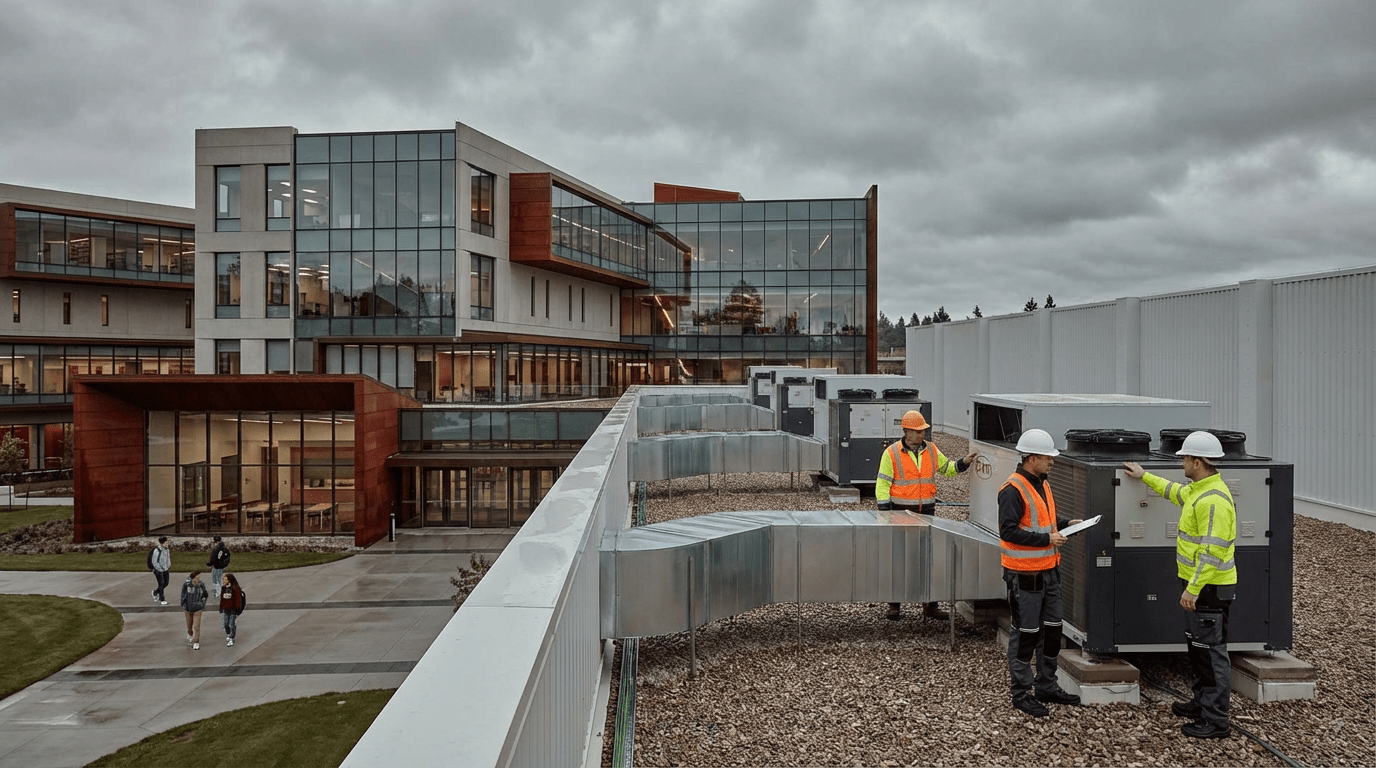
On paper, an HVAC upgrade sounds boring. Ducts. Filters. Mechanical schedules. The kind of thing no one notices unless it goes wrong.
But when the Bellevue School District HVAC delay started affecting classrooms, staff, and families, it quickly became one of those issues that touches everything student comfort, health, budgets, trust, and timing. And suddenly, it wasn’t boring at all.
If you’re a parent, teacher, or even a taxpayer in the area, you’ve probably heard pieces of the story. Maybe through a rushed email from the district. Maybe from a frustrated teacher. Maybe from a kid coming home saying their classroom felt stuffy… or freezing… or smelled “weird.”
This isn’t just about air systems. It’s about how big public projects actually unfold in the real world, where timelines slip, supply chains break, and people are left dealing with the consequences in the meantime.
Let’s talk through it. Calmly. Honestly. With context.
How the HVAC Issue in Bellevue Even Started
Most school districts don’t wake up one morning and decide to overhaul HVAC systems for fun.
In Bellevue, the push came from a mix of aging infrastructure and post-pandemic awareness. Many school buildings were designed decades ago, long before modern air quality standards, long before anyone talked seriously about ventilation rates, air exchanges, or indoor CO₂ levels.
Then COVID happened.
Suddenly, HVAC systems weren’t just about comfort they were about safety.
District leaders began planning upgrades to improve airflow, filtration, and overall indoor air quality. The goal was straightforward: healthier classrooms, fewer disruptions, better learning conditions.
The problem? Planning is one thing. Execution is another.
And that’s where the Bellevue School District HVAC delay began to take shape.
What the HVAC Delay Actually Means (Beyond the Headlines)
When people hear “HVAC delay,” they often imagine a project that’s a few weeks late. Annoying, sure, but manageable.
In reality, the delay unfolded in layers.
Some schools received partial upgrades. Others were waiting on key components. In a few buildings, systems were installed but not fully commissioned, meaning they technically existed but weren’t running at full capacity.
Teachers reported inconsistent temperatures. Parents asked why windows were being opened in winter. Maintenance teams were stretched thin, responding to individual classroom complaints instead of operating within a finished system.
The delay wasn’t one single stoppage. It was a slow ripple effect across multiple campuses.
Why These Delays Happen More Often Than Districts Admit
It’s tempting to frame this as mismanagement. Sometimes that’s fair. Sometimes it isn’t.
With the Bellevue School District HVAC delay, several overlapping factors played a role and they’re the same ones affecting school construction projects across the country.
1. Supply Chain Disruptions Didn’t Magically End
Even after the worst of the pandemic passed, the construction industry never fully bounced back to “normal.”
HVAC components are specialized. Certain parts are manufactured overseas. Others rely on domestic plants that were already backlogged.
One delayed shipment can stall an entire installation sequence.
2. Contractor Availability Is Tight
Qualified HVAC contractors aren’t sitting around waiting for school districts to call. Many are booked months or years out.
If a crew gets pulled to an emergency project elsewhere, or if staffing shortages hit, timelines slip fast.
3. Schools Can’t Shut Down Completely
This is a big one.
Hospitals and data centers can close sections for mechanical upgrades. Schools can’t easily do that.
Work has to be phased around students, testing schedules, holidays, and summer windows that are shorter than people realize. When one phase falls behind, everything downstream shifts.
4. Old Buildings Hide New Problems
Once walls are opened and systems are examined, surprises happen.
Outdated wiring. Structural limitations. Asbestos mitigation. Things no one saw coming during the planning phase.
Each discovery adds time. And cost.
What It’s Like Inside the Classrooms During the Delay
This is the part that doesn’t always show up in official statements.
Teachers adapt. They always do.
Some brought in personal fans. Others rearranged seating to avoid hot spots or cold drafts. In certain classrooms, lessons were paused while maintenance staff checked vents or thermostats.
Students noticed.
Younger kids complained about being uncomfortable. Older students joked about it, but concentration still suffered. Anyone who’s tried to focus in a room that’s too warm knows how quickly attention drifts.
For students with asthma or sensory sensitivities, air quality isn’t a minor issue. It directly affects learning and well-being.
This is why the Bellevue School District HVAC delay felt bigger than just a facilities problem.
Communication: Where Frustration Really Grew
Delays happen. Most people understand that.
What frustrated families wasn’t just the delay itself it was the way information trickled out.
Some parents felt updates were vague. Others said timelines changed without clear explanations. Teachers sometimes learned about changes after students did.
Clear communication doesn’t fix a broken HVAC system, but it does build patience.
And when patience runs out, even small problems feel bigger than they are.
The Budget Question Everyone Keeps Asking
Whenever a public project stalls, the same question comes up:
“How much is this costing us?”
HVAC projects are expensive even when they go smoothly. Delays add labor costs, extend contracts, and sometimes require temporary solutions like portable units or overtime maintenance.
School districts operate within voter-approved budgets, and unexpected overruns create tension. Do funds come from reserves? Are other projects delayed? Will taxpayers see future levies increase?
The district has acknowledged the financial pressure, but exact long-term cost impacts often take time to calculate.
Still, it’s a fair concern and one that deserves transparency.
Is Bellevue Alone in This? Not Even Close.
If this story feels familiar, that’s because it is.
Districts in California, Texas, New York, and the Midwest have faced similar HVAC delays. Aging buildings. New standards. Limited contractors. Tight timelines.
The difference is visibility.
Bellevue has an engaged parent community and high expectations. Issues don’t stay quiet for long.
That can feel uncomfortable for administrators, but it also pushes accountability and, ideally, better outcomes.
What the District Has Done Since the Delay Became Public
To their credit, district officials didn’t ignore the issue.
Steps taken included:
- Adjusting schedules to prioritize the most impacted schools
- Increasing maintenance response teams
- Bringing in external HVAC specialists to review timelines
- Providing interim ventilation solutions where possible
Are these perfect fixes? No.
But they show movement.
Large systems don’t turn on a dime. Progress often looks slow from the outside, even when work is happening behind the scenes.
What Parents and Teachers Can Actually Do
It’s easy to feel powerless during infrastructure delays. But there are constructive ways to stay involved without burning out.
Document, Don’t Just Vent
If a classroom consistently has issues, documentation helps. Dates, temperatures, symptoms. It gives maintenance teams concrete data to work with.
Attend School Board Meetings (Even Occasionally)
You don’t have to speak every time. Just being present sends a signal that people are paying attention.
Ask Specific Questions
Instead of “Why is this taking so long?” try:
- What phase is our school currently in?
- What components are still outstanding?
- What temporary measures are in place?
Specific questions get specific answers.
Will This Affect Student Performance Long-Term?
That’s the worry underneath all of this.
Short-term discomfort usually doesn’t derail education. But prolonged environmental stress can.
Studies have shown that temperature extremes and poor ventilation affect concentration, test performance, and attendance. Even subtle discomfort adds cognitive load.
That’s why finishing these upgrades matters not just for optics, but for outcomes.
The goal isn’t luxury. It’s baseline functionality.
What “Done” Actually Looks Like
When the HVAC work is finally complete, most people won’t notice.
That’s the point.
Classrooms will feel consistent. Air will circulate quietly. Teachers won’t think about thermostats. Students won’t comment on smells or stuffiness.
Success, in this case, looks invisible.
But getting there takes time.
Lessons the District (and Others) Should Take Forward
If there’s a silver lining to the Bellevue School District HVAC delay, it’s the opportunity to learn.
Future projects can benefit from:
- More conservative timelines
- Clearer communication plans
- Early contractor engagement
- Better contingency budgeting
No system is perfect. But systems can improve.
Frequently Asked Questions
What caused the Bellevue School District HVAC delay?
A mix of supply chain issues, contractor availability, phased construction constraints, and unforeseen building challenges contributed to the delay.
Are students safe in affected schools?
The district has stated that interim measures meet safety requirements, though comfort levels have varied while permanent systems are completed.
How long will the HVAC delays last?
Timelines vary by school. Some campuses are nearing completion, while others remain in phased installation.
Is this costing taxpayers more money?
Delays often increase costs, though final figures typically become clear only after projects are completed and audited.
Has the district improved communication?
Efforts have been made, but many families still want clearer, more frequent updates.
A Bigger Picture Worth Remembering
It’s easy to reduce this story to frustration. And yes, frustration is valid.
But it’s also a reminder of how much we ask our schools to do with buildings that weren’t designed for modern demands. We expect safety, comfort, efficiency, and adaptability all at once.
The Bellevue School District HVAC delay isn’t just a facilities hiccup. It’s a case study in how public systems strain under changing expectations.
And hopefully, it’s a moment that leads to smarter planning next time.
 seo provider