
It was one of those moments that only hit you once it’s happening when something you’ve always taken for granted suddenly disappears. Water. Clean tap water. You turn the faucet first thing in the morning and expect it to flow. You fill a pot without a second thought. You brush your teeth, wash your hands, make coffee, water the plants all without a tiny second considered about how it gets there.
But in early August 2025, thousands of folks in Porter Ranch and Granada Hills woke up to a very different reality: no water. And then, a message that spread fast on WhatsApp groups and local community feeds: boil your water before using it. That short phrase “boil water” rippled through kitchens, schools, workplaces, and local businesses like a sudden citywide alert. Something was wrong. Something big.
What followed was days of confusion, adaptation, frustration, creative workarounds, shared bottles of water, and a deeper understanding of how fragile our water system can be when a single valve gives out. Let’s unpack the entire story what actually happened, why a Porter Ranch Granada Hills boil water notice was issued, what it meant in everyday life, how it was resolved, and what this teaches us about infrastructure, community, and emergency response.
The Day It Started: Silent, Sudden, and Surprising
It wasn’t a dramatic event like a storm or an earthquake. There were no sirens or flashing lights. It began with a simple repair job but one that spiraled into something larger.
On August 5, 2025, crews from the Los Angeles Department of Water and Power (LADWP) were conducting scheduled maintenance at a pump station connected to a massive 10‑million‑gallon water tank that feeds the San Fernando Valley communities, including Porter Ranch and Granada Hills. The valve that controls water to a 54‑inch pipeline malfunctioned during this job it broke and couldn’t be reopened. That pipeline supplies water to more than 9,000 customers in the area.
Within hours, water pressure dropped in pipes. For many, water simply stopped flowing at the faucet. Some had trickles; others had nothing. Suddenly, everyday routines were interrupted without warning and it was right before a scorching heat wave hit Southern California too.
In emergency communications that began that day, LADWP warned residents to conserve water, shut off sprinklers, and be prepared for disrupted service. Just conserving wasn’t enough before long, the agency issued a boil water notice to millions of residents in the affected zone, telling them their tap water might not be safe to drink until further notice.
Boil Water Notice What It Really Means
The phrase “boil water notice” sounds dramatic, but at its core, it’s a precautionary public health alert.
When water pressure drops dramatically in a distribution system like it did here there’s a risk that harmful bacteria or other organisms could enter the pipes through tiny openings or weakened seals. That doesn’t mean contamination definitely occurred, but the risk exists. To protect public health, authorities recommend that if you drink or cook with tap water, you must boil it first.
Here’s how it works in practice:
- Bring water to a full rolling boil for at least one minute.
- Allow it to cool before using.
- Use that boiled water for drinking, cooking, making ice, or brushing teeth.
- Anything you ingest especially food and beverages needed boiled or bottled water.
For other uses like showering, bathing, washing hands (without ingesting water), cleaning dishes, or flushing toilets, the water was generally considered okay.
On paper, it sounds straightforward. But in the actual moment, when you’re trying to feed your kids, make coffee, or keep a business operating, it’s disruptive. And that’s where the human side of this story gets interesting.
What Everyday Life Looked Like During the Boil Water Notice
People don’t talk about infrastructure until it stops working. Then it’s all anyone talks about.
Here’s how the Porter Ranch Granada Hills boil water situation played out in real life:
❖ Grocery Store Runs That Felt Like Quests
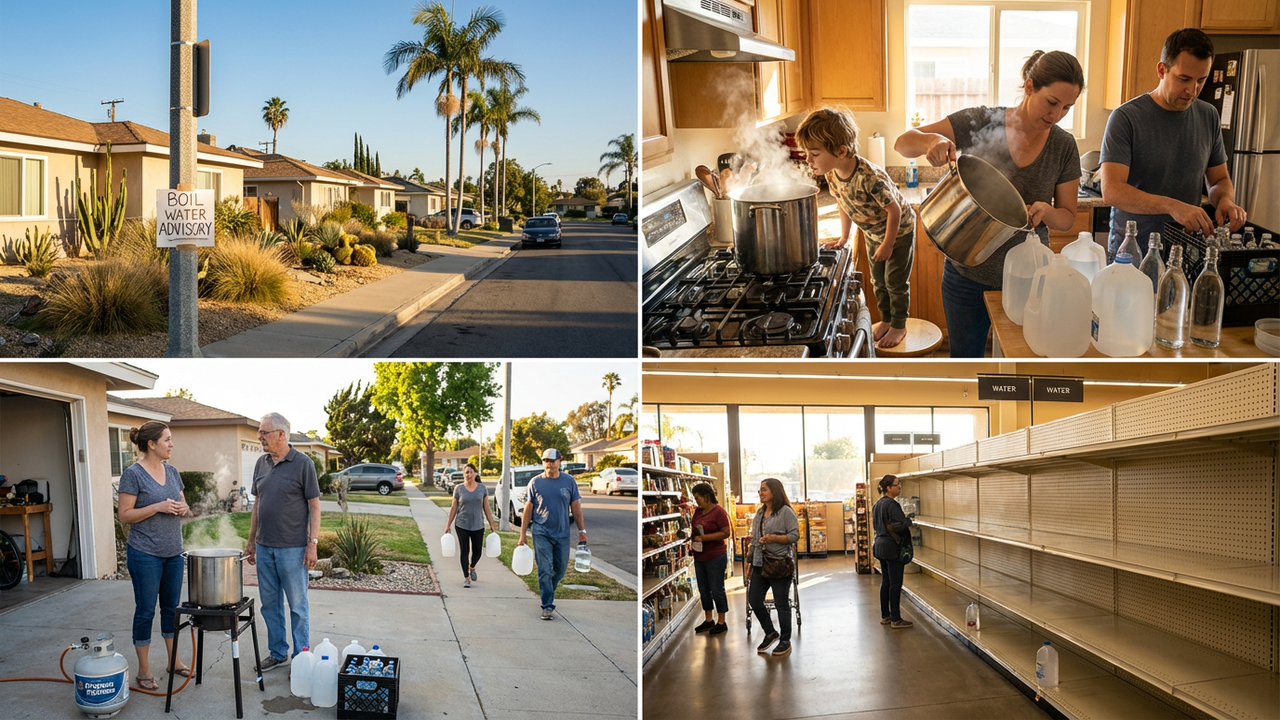
Within hours of the notice, grocery store water aisles began thinning. Bottled water cases upon cases — started disappearing first. Some stores even limited purchases because shelves emptied within hours of restocking. People were understandably worried. When you can’t drink your tap water or cook with it, you suddenly need alternatives. Hey SoCal. Change is our intention.
❖ Kitchens Turned Into Boil Stations
Homes in the area looked like makeshift camping sites. Electric kettles, big pots, and insulated jugs appeared on countertops. It wasn’t unusual to see someone boiling a few gallons of water early in the morning and storing it for coffee, cooking, and teeth‑brushing for the day.
A neighbor described it best: “We went from making iced lattes to boiling water six times a day. The kids learned the water rule faster than I did.” That’s the kind of little detail that tells you this wasn’t just an inconvenience it was a shift in how people approached even the simplest routines.
❖ Local Businesses Had to Adapt Quickly
Restaurants and cafes especially had tough choices. Some places closed temporarily; others went to bottled water or made ice offsite. A few local drink spots in Porter Ranch posted signs saying “limited service” while they worked with delivery of bottled water or rerouted their operations.
One small taco place posted on Instagram that they were using boiled water for food prep and recommended customers support them while they adjusted. These may seem like small business stories, but they show how deeply a boil water notice can ripple through a community’s day‑to‑day life.
❖ Community Support and Digital Chatter
Social media platforms and neighborhood apps from Facebook groups to Reddit threads lit up with updates, jokes, questions, and shared resources. One thread noted how some residents were offering spare water to others nearby. Another joked about how “iced coffee will never be the same.”
Communities have personalities, and in situations like this, you see both the stress and the humor people use to cope.
What LADWP Did And How the Advisory Evolved
The system failure was complex. That broken valve was buried about 24 feet underground next to oil pipelines, a fiber‑optic line, and gas lines so crews had to dig carefully.
Here’s what happened next step by step, more or less:
🛠️ Emergency Repairs
Crews worked around the clock to reach the valve, cut it out, and replace it. This wasn’t a quick job it involved heavy excavation and careful handling of surrounding infrastructure.
🚰 Water Distribution and Support Services
While repairs were underway, LADWP set up bottled water distribution sites in multiple locations parks and community intersections so residents could pick up drinking water daily. Hey SoCal. Change is our intention.
There were even mobile showers and laundry units for people who were especially affected and needed access. This wasn’t just a technical repair; it became a community support mission.
🔬 Water Quality Testing
Once the valve was fixed and the system repressurized, water quality testing began. Two rounds of testing were required to confirm safety before the boil water notice could be lifted. It wasn’t enough to fix the pipe officials had to be sure the water met state and federal drinking water standards.
🎉 Boil Water Advisory Lifted
After nearly a week of outage, repair, and testing, LADWP officially announced that tap water was safe again to drink and use normally. Residents were asked to flush their home systems by running faucets for a few minutes to clear stagnant water.
That day the first sip of unboiled water from the tap was a little celebration for many. You could almost feel the collective relief.
Lessons From the Porter Ranch Granada Hills Boil Water Story
If there’s one thing this experience hammered home, it’s that modern life depends on hidden systems most of us never see until something goes wrong.
Here’s what this episode taught local residents and city planners alike:
✔️ Infrastructure Matters Even When It’s Invisible
A single valve one component out of thousands caused a ripple effect across homes, businesses, and daily routines. It makes you wonder what other hidden parts of our city infrastructure need attention before the next outage.
✔️ Communication Can Make or Break Public Trust
During the early days, reports were scattered across texts, email alerts, news sites, and social feeds. Some residents said they weren’t signed up for official notifications. That gap made some people feel like they were left in the dark. It’s a lesson in how essential timely, clear, and reachable communication is when basic services fail.
✔️ Community Resilience Is Real
From neighbors sharing bottles of water to local cafes adjusting service, people showed resilience and creativity. That’s the quieter side of crisis the way communities pull together.
✔️ Preparedness Pays Off
After this event, many families started keeping small emergency water supplies, just in case. A bit of preparedness goes a long way not just in Porter Ranch and Granada Hills, but anywhere.
FAQs About the “Porter Ranch Granada Hills Boil Water” Advisory
Here are some of the most common questions residents had explained simply:
Q: Do I still need to boil water?
No, the boil water advisory was officially lifted after successful testing confirmed water safety.
Q: What should I do before using tap water again?
Flush your home plumbing by running water from all faucets for a few minutes. This clears out any stale water sitting in pipes from the outage period.
Q: Is it okay to use water for showering and bathing?
Yes. The advisory mainly impacted ingestion drinking and cooking. For bathing and washing hands (without ingesting water), it was generally safe.
Q: What if someone got sick after using the water?
If you experienced symptoms like nausea or cramps, it’s best to consult a healthcare provider. That’s part of why the boil advisory was issued to reduce that risk.
Q: Will this happen again?
Nobody can say for sure. But this incident highlights the need for investment in aging infrastructure and better contingency planning.
Want to Know More About Drinking Water Safety?
For a deeper look at why boil water advisories are issued and what they mean for public health, the Centers for Disease Control and Prevention (CDC) has an excellent guide here.
This resource explains how and why authorities recommend boiling water and what it protects against.
Final Thoughts: A Reminder of the Basics
Water something most of us never think about became a story overnight. For a few days in Porter Ranch and Granada Hills, everyday routines shifted dramatically: people boiled water for coffee, stood in line for bottled water, shared updates on community apps, and rediscovered how precious a simple tap can be.
When services fail, neighbors notice. Stories get shared. And when things get back to normal again, people appreciate what they once overlooked.
This “Porter Ranch Granada Hills boil water” episode wasn’t just a technical advisory it was a snapshot of community, adaptability, and the hidden infrastructure that keeps our lives flowing.
 seo provider