
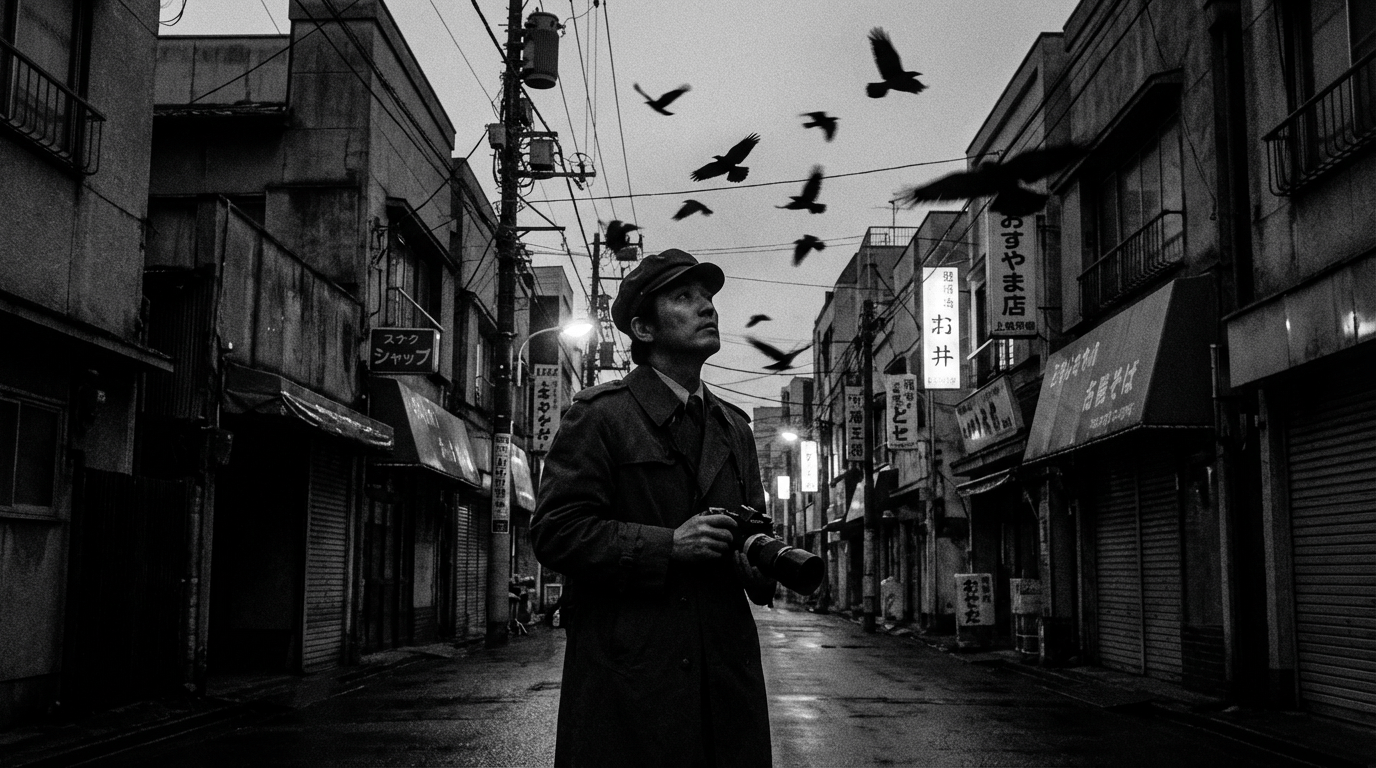
Masahisa Fukase didn’t just take photographs. He bled into them.
When people talk about photographers who lived for their art, his name comes up quietly, almost cautiously. Not because his work wasn’t powerful. It was devastatingly powerful. But because behind those images lies a life that slowly collapsed under the weight of obsession, loneliness, and emotional excess.
So how did Masahisa Fukase ruin his life with photography?
Not in one dramatic moment. Not with a single mistake. It happened gradually, frame by frame, roll by roll, as his camera stopped being a tool and became his entire emotional world.
This is not a clean success story. It’s a human one. Messy. Painful. And unforgettable.
The Man Before the Myth
Masahisa Fukase was born in 1934 in Hokkaido, Japan, into a family that ran a photo studio. From the outside, his path seemed almost destined. Cameras were everywhere. Photography was normal. Accessible. Familiar.
But what’s interesting is that Fukase didn’t treat photography as a profession early on. He treated it as a mirror.
He studied economics first, not art. Even when he later enrolled at Nihon University’s College of Art, photography wasn’t just a skill he was mastering. It was a way to process things he couldn’t say out loud.
Friends described him as sensitive, emotionally intense, and deeply insecure. Not the kind of person who casually separates work from life. For Fukase, there was no line.
And that’s where things began to tilt.
Photography as Emotional Survival
Many photographers document the world. Fukase documented his inner chaos.
From the beginning, his work focused on himself, his relationships, his fears. Self-portraits weren’t vanity projects for him. They were confessions. Sometimes desperate ones.
He photographed his face repeatedly, distorted by mirrors, shadows, reflections. He photographed himself as if trying to confirm he still existed.
This approach made his work raw and groundbreaking, especially in postwar Japan where personal vulnerability wasn’t often displayed so openly. But it also set a dangerous precedent.
Photography wasn’t something he did.
Photography became something he needed.
And when art becomes emotional oxygen, it starts demanding everything.
Must Read: How to Start a Tourist Drone Photography Business in Texas
Yoko: Love Turned Into a Subject
To understand how Masahisa Fukase ruined his life with photography, you have to talk about Yoko.
Yoko was his wife, his muse, and eventually, his emotional undoing.
Their relationship was intense, passionate, and deeply complicated. Fukase photographed Yoko obsessively. Not in a flattering, romanticized way, but in a raw, sometimes uncomfortable manner.
She wasn’t just his partner. She became part of his ongoing self-examination.
He photographed their intimacy. Their distance. Their silence. Their tension.
At first, it felt like collaboration. Then it started feeling like exposure.
Yoko later said that being constantly photographed made her feel less like a person and more like a symbol of Fukase’s emotional state. She wasn’t allowed to simply exist. Everything had to mean something.
Over time, the camera stopped recording love and started consuming it.
Their marriage eventually collapsed.
And Fukase never truly recovered.
When Art Stops Protecting You
For many artists, work can be a refuge. For Fukase, it became a trap.
After the divorce, his photography turned darker. Lonelier. More repetitive. He began circling the same emotional wounds instead of healing them.
This is where his most famous work, Ravens, begins to take shape.
Ravens: The Masterpiece Born From Isolation
If you’ve ever seen images from Ravens, you know they don’t feel gentle.
Dark silhouettes. Stark contrasts. Birds frozen mid-flight or perched like omens against empty skies.
The ravens weren’t symbolic in an academic way. Fukase wasn’t trying to impress critics with metaphors.
He once implied they represented himself.
Alone. Observing. Trapped between movement and stillness.
The series was visually stunning. Critics praised it. Museums displayed it. Decades later, it would be exhibited internationally, including institutions like the Tate and MoMA (you can see references to Fukase’s work through major photography archives such as the Tate’s photography collection.
But while the world celebrated Ravens, Fukase was unraveling.
He was drinking heavily. Isolating himself. Losing touch with friends. Photography no longer gave him relief. It amplified the emptiness.
The same obsession that produced brilliance was hollowing him out.
The Dangerous Romance of Suffering
There’s a romantic idea we like to believe about artists. That suffering fuels genius. That pain is somehow productive.
Fukase’s life is a warning against that idea.
Yes, his pain shaped his work. But it also destroyed his ability to live outside of it.
He leaned into despair because it felt familiar. Because it felt honest. Because the camera understood him better than people did.
But cameras don’t talk back. They don’t interrupt destructive patterns. They don’t tell you to stop.
So he didn’t.
The Fall That Ended Everything
In 1992, Masahisa Fukase fell down a flight of stairs at a bar in Tokyo.
The accident caused severe brain damage. He never fully recovered.
From that moment on, the man who had spent his life documenting himself could no longer create.
Photography, the thing that had consumed him, was suddenly gone.
He lived the remaining years of his life in care facilities, unable to speak properly, unable to photograph, unable to engage with the world in the way he once had.
He died in 2012.
Quietly.
Almost anonymously.
So… How Did Masahisa Fukase Ruin His Life With Photography?
Not because photography is dangerous.
But because he used it as a substitute for healing.
He replaced communication with images. Therapy with self-portraits. Connection with documentation.
Every emotional crisis became a project. Every relationship became material.
That kind of life has no off switch.
And eventually, it burns out.
Why His Story Still Matters
Today, Fukase’s work is more celebrated than ever. New books are published. Exhibitions travel internationally. Younger photographers discover him and feel seen.
There’s nothing wrong with admiring his art.
But his life asks an uncomfortable question:
What happens when your identity becomes inseparable from your work?
In a world obsessed with documenting everything, Fukase feels painfully relevant. We’re all carrying cameras now. Phones. Feeds. Archives of ourselves.
His story reminds us that reflection without balance can turn into self-erasure.
Lessons Hidden Inside the Tragedy
1. Art Cannot Replace Human Connection
Fukase photographed loneliness instead of confronting it. Images can express feelings, but they can’t resolve them.
2. Obsession Is Not the Same as Dedication
Dedication builds. Obsession consumes.
3. Not Everything Needs to Be Turned Into Art
Some moments are meant to be lived, not captured.
4. Pain Is Not a Requirement for Meaningful Work
Suffering may influence art, but it shouldn’t be worshipped.
How the Photography World Views Fukase Today
Among photographers, Fukase occupies a strange space. Revered, yet approached with caution.
He’s often discussed alongside deeply personal photographers like Nan Goldin or Francesca Woodman, artists who also blurred life and work to dangerous degrees.
Major photography publishers continue to reprint Ravens. Museums contextualize his work within postwar Japanese photography, highlighting its emotional intensity rather than glamorizing his collapse.
You can find scholarly discussions of his work through photography-focused archives and exhibitions like those referenced by MoMA’s photography department.
The conversation has shifted. Less “look how tortured he was.” More “what can we learn from this?”
That shift matters.
FAQs About Masahisa Fukase
Was Masahisa Fukase mentally ill?
There’s no official diagnosis publicly confirmed. However, many accounts describe him as emotionally fragile, deeply depressed, and prone to isolation, especially later in life.
Did Fukase regret his obsession with photography?
There’s no clear record of regret. But those close to him suggested he was deeply unhappy and unable to escape his patterns.
Is Ravens autobiographical?
Yes, emotionally. While not literal, Fukase himself implied the ravens represented his internal state and loneliness.
Was his accident related to his lifestyle?
Indirectly. Heavy drinking and isolation were part of his life at the time, which may have contributed to the circumstances.
Should photographers avoid personal work because of Fukase?
No. Personal work can be powerful and healthy. The lesson isn’t to avoid vulnerability, but to maintain balance.
Final Thoughts That Don’t Tie Things Up Neatly
Masahisa Fukase didn’t ruin his life with photography because photography failed him.
He ruined his life because he asked photography to do things it never could.
Heal him. Save him. Replace human connection.
And yet, somehow, through all that destruction, he left behind images that still stop people in their tracks.
That contradiction is what makes his story so hard to forget.
And maybe that’s the real legacy.
Not a cautionary tale against art.
But a reminder to step away from the lens once in a while and make sure you’re still living on the other side of it.
 seo provider