
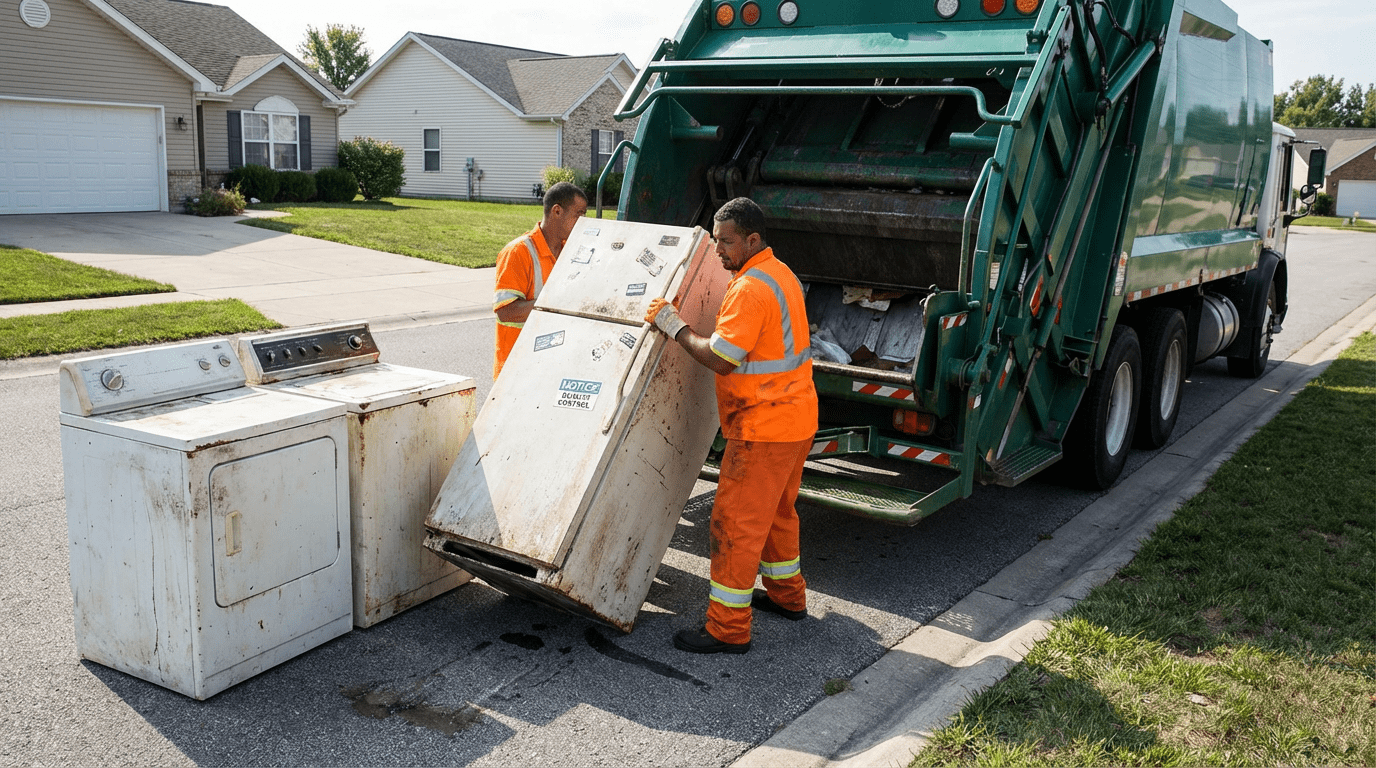
If you’ve ever driven past a curb and seen an old fridge sweating in the sun, or a washing machine sitting awkwardly next to trash bags, you’ve already brushed up against the idea of white goods even if you didn’t know the name for it.
In the refuse business what are white goods are a category all their own. Not quite regular trash. Definitely not recyclables you toss in a blue bin. And honestly? They come with more rules, headaches, and hidden value than most people realize.
Let’s slow this down and talk about it properly. No stiff definitions. No textbook tone. Just how people actually deal with white goods in the waste and refuse industry.
What Does “White Goods” Mean in the Refuse Business?
In the refuse business, white goods refer to large household appliances, usually ones that used to be white enamel back in the day. The name stuck, even though modern appliances come in stainless steel, black, slate, or whatever trend is hot this year.
These are bulky, heavy items that cannot be handled like normal household waste.
Common examples include:
- Refrigerators
- Freezers
- Washing machines
- Dryers
- Dishwashers
- Ovens and stoves
- Air conditioners
- Water heaters
If it plugs in, cools down, heats up, or spins clothes around it’s probably a white good.
And in the refuse business, that classification changes everything.
Why White Goods Are Treated Differently Than Regular Trash
Here’s the thing most people don’t think about: white goods are full of materials that can’t just be buried in a landfill without consequences.
We’re talking about:
- Refrigerants that harm the ozone layer
- Oils and lubricants
- Heavy metals
- Electrical components
- Large amounts of steel and copper
Because of this, waste companies, municipalities, and recycling facilities handle white goods through special collection and processing systems.
Throwing one into a landfill untreated? That’s a fast track to environmental fines.
A Quick Real-Life Example (This Happens a Lot)
A small refuse company in a mid-sized town once accepted refrigerators the same way they accepted couches dump and forget.
Within a year, regulators showed up.
Why? Refrigerants like CFCs and HFCs were leaking into the soil and air. The company had to pay fines, hire certified technicians, and retrofit their entire operation.
Lesson learned the hard way.
That’s why in the refuse business, white goods are never “just trash.”
The Role of White Goods in the Modern Refuse Industry
White goods sit at an interesting intersection of:
- Waste management
- Environmental regulation
- Scrap metal recycling
For refuse businesses, they represent both a challenge and an opportunity.
The challenge:
- Special handling requirements
- Storage space
- Labor-intensive processing
- Regulatory compliance
The opportunity:
- Valuable scrap metal
- Copper and aluminum recovery
- Paid appliance pickup services
- Partnerships with recyclers
Handled right, white goods can actually become a revenue stream, not a cost.
Why Refrigerators and Freezers Are a Big Deal
Among all white goods, refrigerators and freezers cause the most headaches.
Why?
Because they contain refrigerants, which must be:
- Safely recovered
- Documented
- Handled by certified professionals
In many countries, it’s illegal for refuse businesses to process fridges without proper refrigerant recovery equipment.
According to the U.S. Environmental Protection Agency, improper handling of refrigerants contributes directly to climate damage and ozone depletion.
That’s why many refuse operations separate refrigeration units from other white goods immediately upon collection.
White Goods vs. Brown Goods (Yes, That’s a Thing)
In the refuse business, categories matter.
White goods = large household appliances
Brown goods = electronics like TVs, computers, stereos
They’re processed differently, regulated differently, and often sent to entirely separate facilities.
Confusing the two can cause compliance issues, especially when electronics contain lead, mercury, or lithium batteries.
How White Goods Are Collected in the Refuse Business
Collection varies depending on location, but common methods include:
Curbside Bulk Pickup
Residents schedule special pickups for appliances. These are often fee-based.
Drop-Off Centers
Municipal waste facilities accept white goods on designated days.
Retailer Take-Back Programs
Buying a new washer? The old one gets hauled away.
Commercial Contracts
Property managers, landlords, and renovation companies generate white goods in bulk.
Refuse businesses often design entire routes just for these items.
What Happens to White Goods After Collection
Once collected, white goods typically go through a multi-step process.
Step 1: Refrigerant Removal
Certified technicians remove refrigerants and oils.
Step 2: Manual Dismantling
Motors, compressors, and wiring are removed.
Step 3: Metal Separation
Steel, copper, and aluminum are sorted.
Step 4: Recycling or Disposal
What can be recycled is sold. What can’t be reused is disposed of properly.
According to Wikipedia’s overview of appliance recycling, over 75% of a typical appliance can be recovered and reused when processed correctly.
Why Scrap Yards Love White Goods
From a scrap perspective, white goods are gold. Well… steel, actually.
A single washing machine can contain:
- 100+ pounds of steel
- Copper wiring
- Aluminum components
Refuse businesses often partner with scrap yards to offset handling costs.
Some even design their entire white goods workflow around scrap recovery.
Environmental Impact: Why This Category Exists at All
The reason the refuse business even uses the term white goods is environmental control.
Without separation:
- Refrigerants leak
- Metals go to waste
- Landfills fill faster
- Pollution increases
With proper handling:
- Greenhouse gases are reduced
- Materials are reused
- Energy savings multiply
It’s one of the quiet success stories of modern waste management.
White Goods in Residential vs. Commercial Refuse Operations
Residential
- Lower volume
- More variety
- Scheduled pickups
Commercial
- Higher volume
- Predictable patterns
- Contract-based
Apartment complexes, hotels, and laundromats generate white goods at a much higher rate, and refuse businesses plan accordingly.
The Economics of White Goods in the Refuse Business
Let’s talk money. Because it matters.
Costs include:
- Labor
- Equipment
- Compliance
- Transport
Revenue sources include:
- Pickup fees
- Scrap metal sales
- Manufacturer rebates
- Recycling incentives
Smart refuse businesses balance both sides carefully.
Why Homeowners Should Care (Even If You’re Not in the Industry)
Because improper disposal can cost you too.
Many municipalities fine residents for dumping white goods illegally. Others charge cleanup fees if appliances are abandoned.
Knowing what counts as a white good helps avoid those surprises.
Common Mistakes People Make With White Goods
- Leaving doors attached to fridges (safety hazard)
- Dumping appliances illegally
- Assuming all recycling centers accept them
- Not draining water heaters
Refuse professionals see this every week.
Future Trends: Where White Goods Are Headed
The refuse business is changing fast.
Expect:
- More smart appliances
- More electronics inside appliances
- Stricter environmental laws
- Higher recycling standards
White goods will only become more regulated, not less.
FAQs About White Goods in the Refuse Business
What are white goods in the refuse business?
They are large household appliances like refrigerators, washers, dryers, and ovens that require special handling due to size and materials.
Why can’t white goods go in regular trash?
They contain refrigerants, metals, and components that can harm the environment if not processed correctly.
Are white goods recyclable?
Yes. A significant portion of white goods can be recycled, especially metals like steel and copper.
Do refuse companies charge extra for white goods pickup?
Usually, yes. The extra labor and compliance requirements increase costs.
Is a microwave considered a white good?
Sometimes. It depends on the refuse company, but many classify it separately due to electronics inside.
Final Thoughts (No Formal Wrap-Up, Just Real Talk)
In the refuse business, white goods aren’t glamorous. They’re heavy. They’re awkward. They take time.
But they matter.
They sit right at the crossroads of environmental responsibility and practical waste management. Handle them wrong, and you pay for it financially and environmentally. Handle them right, and they quietly become one of the most efficient recycling streams in the industry.
So the next time you see an old fridge waiting for pickup, you’ll know there’s a whole system behind that moment. Trucks, regulations, scrap yards, technicians. All moving quietly. Doing the job.
And that’s what white goods really are in the refuse business.
 seo provider